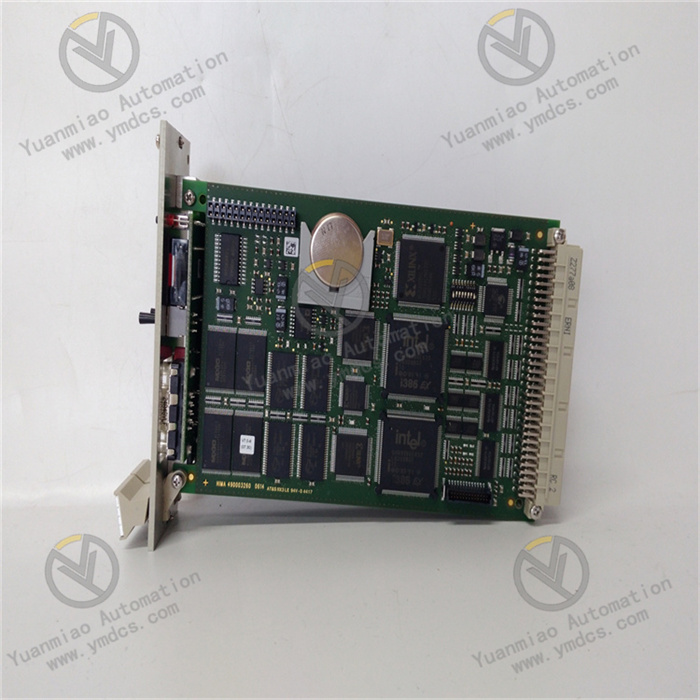
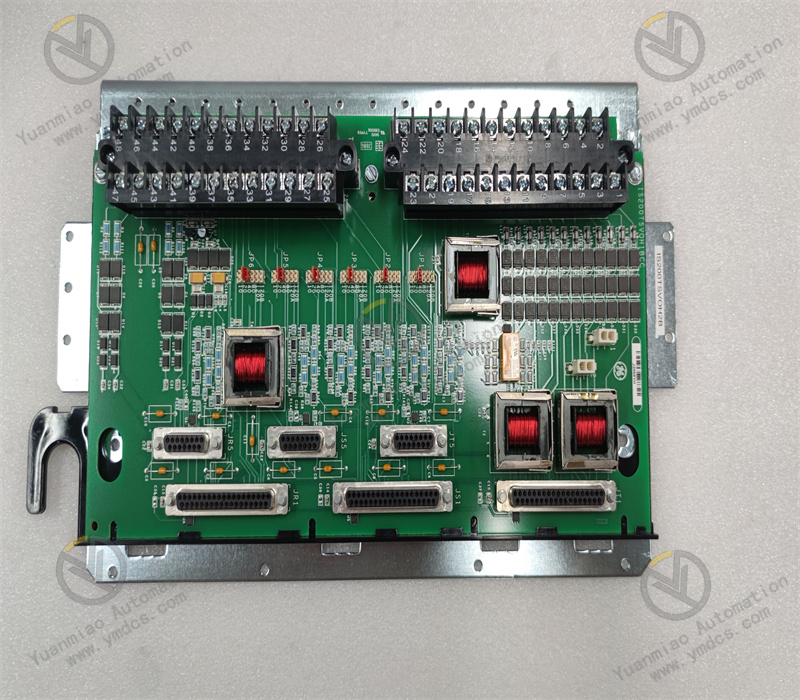
Description
1. Product Overview
IS200TSVOH2B is a dedicated turbine servo‑valve interface terminal board for GE (General Electric, USA) Speedtronic Mark VI / VIe series. As a core servo‑drive supporting module of gas‑turbine and steam‑turbine generator‑set control systems, it is designed for signal transfer, drive and regulation of unit servo‑actuators and trip solenoid valves.
Acting as the signal relay and power‑drive unit between the main‑control system and on‑site servo valves / trip solenoid valves, this board integrates multiple functions including digital‑signal reception, servo analog drive, solenoid‑valve loop management and fault diagnostic monitoring. It is mainly responsible for precise drive and control of servo‑actuators such as fuel valves, inlet valves and exhaust valves, as well as status monitoring and logic management of unit trip solenoid valves. It serves as a critical interface board for turbine‑unit speed regulation, load control, start‑stop interlock and fault trip protection. Adopting industrial SMT technology, full‑loop electrical‑isolation and multi‑protection architecture, and equipped with dedicated servo‑drive circuits, the board features fast signal response, stable drive performance, high control accuracy, comprehensive self‑diagnosis and excellent anti‑interference capability. Natively compatible with the full‑range GE Mark VI / VIe turbine‑control systems, it supports both TMR (Triple Modular Redundancy) and simplex architectures. With standard DIN‑rail mounting, it adapts to harsh power‑plant operating‑conditions including high temperature, intensive electromagnetic interference, mechanical vibration and 24‑hour non‑stop heavy‑duty operation. Featuring plug‑and‑play and excellent interchangeability, it is widely deployed in automatic‑control systems of thermal‑power plants, gas‑turbine stations and combined‑cycle power plants.
2. Core Functions
High‑precision servo‑valve drive and controlBuilt‑in dedicated servo‑drive arithmetic circuits accurately receive digital control commands issued by the main controller and convert them into stable analog drive‑signals to drive various turbine‑unit servo regulating valves. Stepless fine‑tuning of fuel‑valve opening, inlet air flow and exhaust conditions is realized. With fast servo response and high control linearity, it perfectly meets requirements of dynamic load regulation and steady‑state parameter control, ensuring stable and controllable unit speed and load.
Multi‑channel signal acquisition and loop monitoringThe board is configured with 6 signal‑input channels and 2 dedicated output channels. It synchronously collects servo‑valve feedback signals, trip‑solenoid‑valve status signals and loop operating‑condition signals, and monitors in real‑time the on‑off state of servo‑drive loops, solenoid‑valve operating status and circuit anomalies. Comprehensive operating data of field actuators is provided for logic operation, status judgment and fault early warning of the main‑control system.
Safety management of trip solenoid valvesSpecially adapted for 125 VDC trip‑solenoid‑valve loops of generating units. It supports excitation‑status monitoring, loop‑fault judgment and interlock‑protection logic for solenoid valves, and accurately identifies abnormal conditions such as open circuit, short circuit and power loss of solenoid valves. Cooperating with the main‑control system, it implements emergency unit tripping and start‑stop interlock protection, establishes a safety baseline for turbine‑unit operation and avoids unit‑runaway risks caused by actuator failures.
Multi‑layer electrical‑fault protection mechanismComprehensive protection against over‑current, over‑voltage, under‑voltage and short‑circuit is embedded. Electrical parameters of power‑supply and drive loops are monitored in real‑time. Once voltage anomaly, current overload, circuit short‑circuit or other faults are detected, latch‑up protection is immediately triggered to cut off power supply to the faulty branch and isolate fault points, preventing burnout of the board and field actuators without affecting other normal loops, thus greatly improving system operational safety.
Real‑time fault self‑diagnosis and traceabilityAn on‑board dedicated diagnostic‑monitoring unit supports loop fault self‑inspection, signal‑anomaly judgment and operating‑condition traceability. It can precisely locate problems such as servo‑loop drift, signal distortion, circuit faults and solenoid‑valve failure, and upload fault codes and status information to the upper monitoring system in real‑time, greatly reducing troubleshooting workload and improving fault‑handling efficiency.
- Long‑term industrial‑grade operation with strong anti‑interference capabilityFull‑loop electrical‑isolation and signal‑filtering & shaping design effectively resist high‑frequency EMI/RFI interference, voltage fluctuation, ground‑potential difference and mechanical vibration in power‑plant environments. Manufactured with industrial SMT technology and conformal‑coating protection, the board delivers ultra‑low temperature drift and no performance degradation during long‑time operation. It is suitable for 7×24‑hour continuous heavy‑load operation throughout the year with outstanding maintenance‑free performance.
3. Technical Specifications
| Parameter Item | Technical Specification |
|---|---|
| Model No. | IS200TSVOH2B |
| Brand | GE (General Electric, USA) |
| Product Series | GE Speedtronic Mark VI / VIe Turbine‑Control System |
| Product Type | Servo‑valve interface terminal board, trip solenoid‑valve control board |
| Channel Configuration | 6 signal‑input channels, 2 servo‑drive output channels |
| Trip‑Solenoid‑Valve Adaptation | 125 VDC solenoid‑valve loop compatible |
| Operating Supply Voltage | 24 VDC (adaptable range: 18‑32 VDC) |
| Auxiliary Power Supply | +5 VDC / 6 A on‑board auxiliary supply |
| Core Functions | Servo‑valve drive & control, solenoid‑valve status monitoring, loop fault diagnosis, interlock protection, signal transfer |
| Protection Features | Full‑range electrical protection: over‑voltage, under‑voltage, over‑current, short‑circuit |
| Mounting Method | Standard DIN‑rail mounting, suitable for industrial control cabinets |
| Supported Architectures | TMR (Triple Modular Redundancy), Simplex |
| System Environment | Compatible with QNX operating system and full range of GE unit configuration software |
| Process Characteristics | Industrial SMT technology, full‑loop isolation, low temperature drift, EMI resistance, vibration‑proof & corrosion‑resistant |
| Key Features | Precise servo drive, multi‑channel signal monitoring, fault self‑diagnosis, full electrical protection, wide compatibility, long‑term stable performance |
4. Working Principle
IS200TSVOH2B operates on a closed‑loop workflow: main‑control‑command reception → signal isolation & shaping → servo‑drive output → field‑loop feedback → status monitoring & diagnosis → fault interlock protection.
During unit operation, digital servo‑regulation commands issued by the Mark VI / VIe main‑control system are transmitted to this board via the backplane bus. The board first performs isolation filtering, signal shaping and noise reduction to eliminate signal distortion caused by industrial electromagnetic interference and guarantee command accuracy.
Pre‑processed command signals are sent to the on‑board servo‑drive unit and converted into high‑precision analog drive‑signals, which are output to field actuators such as fuel and inlet servo‑valves to dynamically fine‑tune valve opening and realize closed‑loop precise regulation of unit speed, load and inlet parameters. Meanwhile, 6 input channels continuously collect servo‑valve position feedback, trip‑solenoid‑valve operating status and loop electrical parameters. Command values are constantly compared with actual feedback values to dynamically correct drive deviations. Once over‑voltage, over‑current, short‑circuit, signal anomalies or solenoid‑valve faults are detected, protection is immediately activated to lock fault status, upload fault information and trigger system interlock protection and fault‑tolerant operation, ensuring accurate regulation, controllable operation and effective fault prevention of the turbine unit.
5. System‑Architecture Compatibility
This original‑GE dedicated servo‑interface terminal board for Mark VI / VIe turbine‑control systems features hardware dimensions, DIN‑mount specifications, signal logic, bus‑interaction protocols and electrical parameters fully natively compatible with GE Speedtronic Mark VI / VIe gas‑ and steam‑turbine control systems. It can seamlessly cooperate with EX2100/EX2100E excitation‑control systems and supports both TMR triple‑modular‑redundant and simplex architectures. No additional programming‑configuration, hardware modification or signal adapter is required. Plug‑and‑play replacement is available for aged, faulty or worn‑out boards of the same model, making it suitable for power‑plant maintenance, system upgrades, servo‑control‑accuracy optimization and actuator‑loop‑retrofit projects.
It seamlessly connects with various turbine‑unit servo regulating valves, 125 VDC trip solenoid valves and on‑site position‑feedback sensors, and is fully compatible with the whole‑chain logic of servo control, interlock protection and condition monitoring without modification to existing main‑control programs, protection logics or wiring specifications. Its standard DIN‑rail layout fits common power‑plant control cabinets, and it can be rapidly integrated into new‑build control‑system projects and automation / servo‑accuracy retrofits of legacy units, delivering excellent adaptability, interchangeability and scalability.
6. Application Scenarios
Benefiting from high‑precision servo drive, full‑loop status monitoring, multi‑layer electrical protection, fault self‑diagnosis and stable anti‑interference performance, this board is engineered for harsh operating‑conditions of turbine‑generator units, including high ambient temperature, intensive electromagnetic interference, frequent mechanical vibration, volatile load and 24‑hour non‑stop heavy‑duty operation. It is widely deployed in GE Mark VI / VIe turbine‑control systems for large‑scale thermal‑power plants, gas‑turbine power stations and combined‑cycle power plants.
It is mainly used for precise drive and opening regulation of fuel, inlet and exhaust servo‑valves, as well as trip‑solenoid‑valve loop monitoring, start‑stop interlock management and fault‑safety protection. It is a core interface board for stable speed control, accurate load regulation, safe start‑stop interlock and reliable fault tripping of turbine units. Widely applied in routine power‑plant maintenance, legacy control‑system upgrades, servo‑regulation‑accuracy optimization, actuator‑loop retrofits and faulty‑board replacement, it solves common defects of traditional servo‑control loops such as slow response, large regulation deviation, insufficient fault‑monitoring coverage and poor anti‑interference performance. The dynamic regulation performance and overall operational reliability of turbine‑control systems are greatly improved, ensuring long‑term safe, efficient and stable grid‑connected operation of generator units.