Description
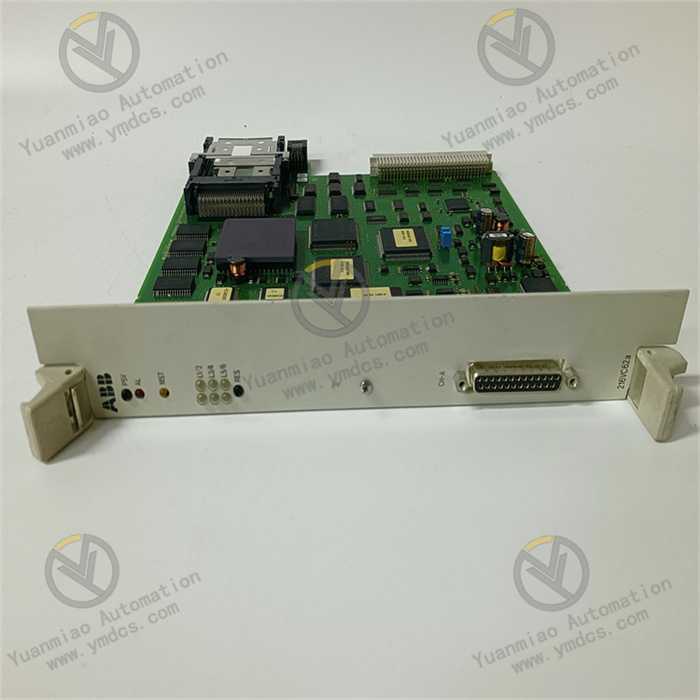
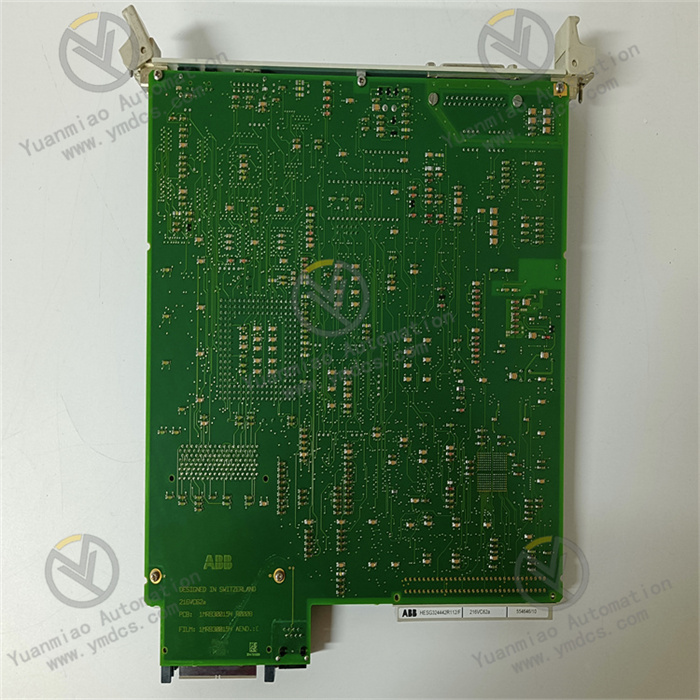
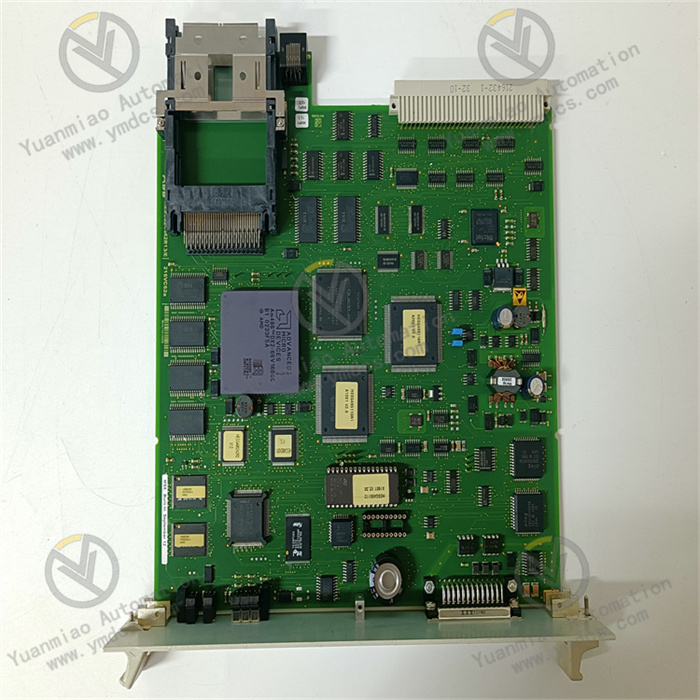
ABB 216VC62a HESG324442R112/F
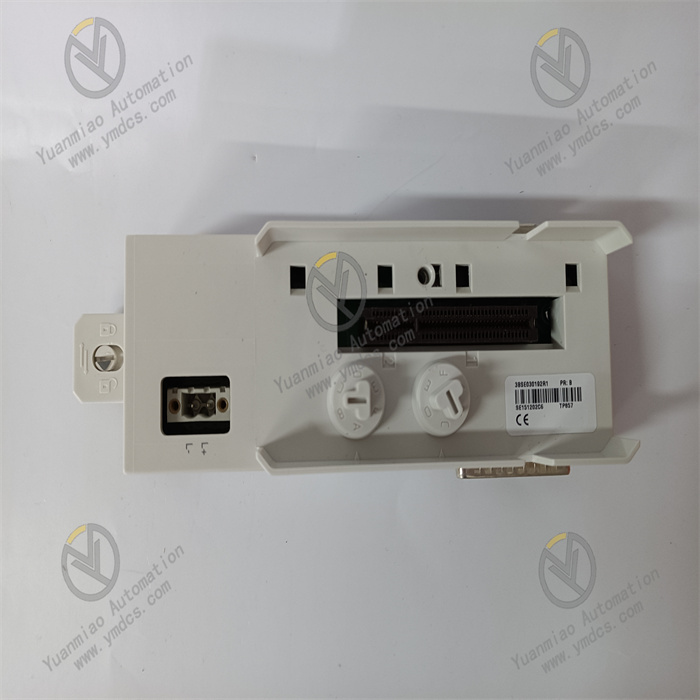
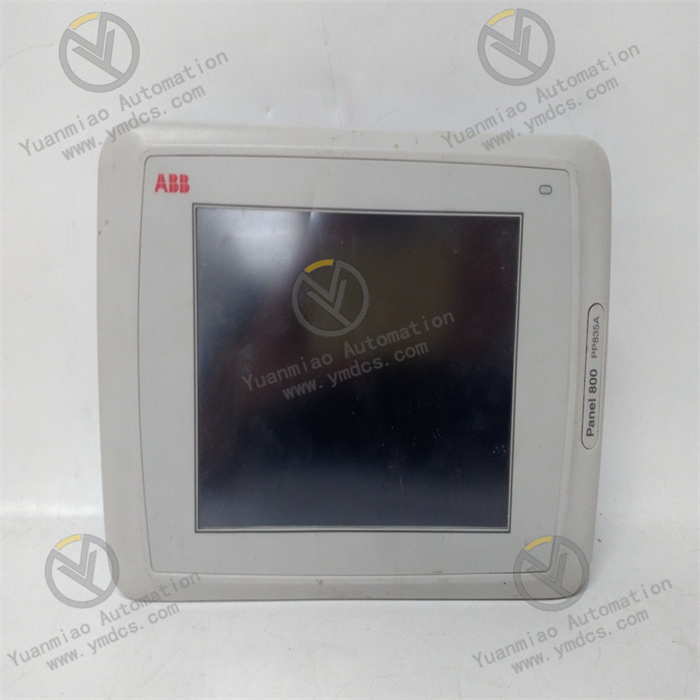
ABB 216VC62A HESG324442R112/F is a digital processing / processor unit (CPU / signal processing card). It is designed as core equipment for real-time acquisition, filtering, arithmetic conversion, logic control, and data communication of analog/digital signals in industrial processes. It integrates five core capabilities: high-speed computing, high-precision signal conditioning, multi-protocol communication, redundancy and fault tolerance, and strong anti-interference performance. As a key component in large-scale ABB industrial automation control systems (such as 800xA, UNITROL excitation systems), it implements closed-loop process control, equipment condition monitoring, fault diagnosis, and data uploading.
This module performs five core tasks: signal acquisition, digital computation, logic control, communication, and fault alarm. It accurately processes analog signals including voltage, current, tension, and temperature, as well as digital switching/pulse signals from industrial sites. A built-in 32-bit high-performance embedded processor executes real-time filtering, PID control, trend analysis, and logic judgment. Dual redundant communication interfaces and fault-tolerant mechanisms ensure continuity of data transmission and control command output.
It is compatible with ABB AC500 PLC, 800xA DCS, and UNITROL series digital excitation systems. It is widely used in high-reliability industrial applications such as power generation (excitation regulation), metallurgical rolling, petrochemical engineering, and water treatment. It effectively resolves issues including signal distortion, control lag, and poor system compatibility in harsh interference environments, providing core hardware support for stable operation of large industrial plants.
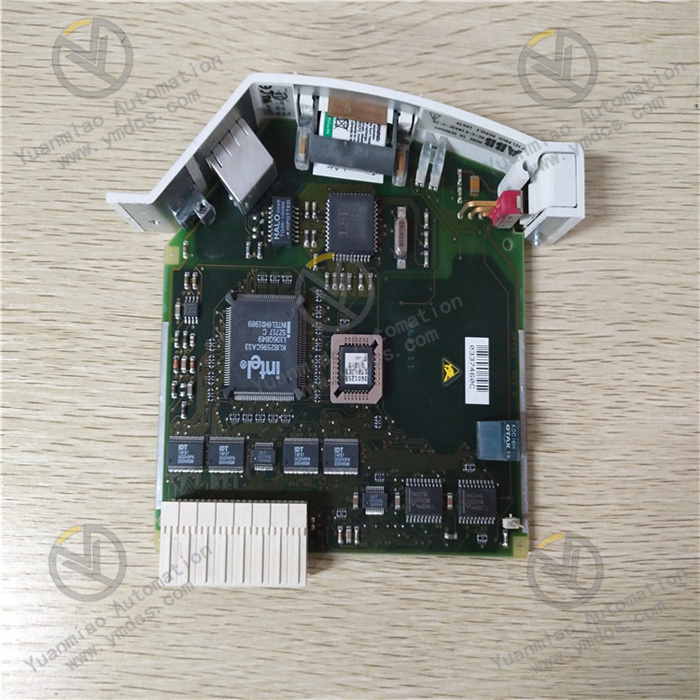
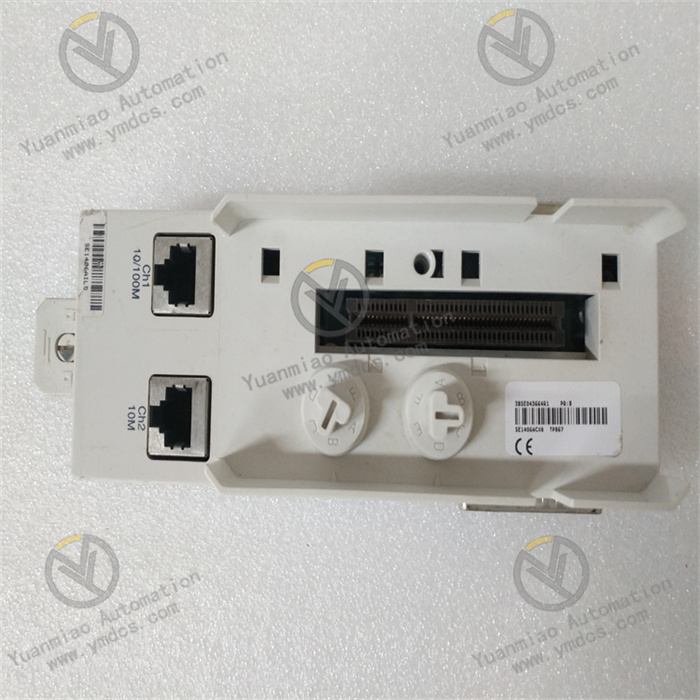
The unit features an industrial-grade board design suitable for standard cabinet slots or rail mounting, enabling dense arrangement in control cabinets. It is equipped with high-density gold-plated connectors for fast wiring of power, multi-channel analog/digital signals, and communication lines, improving installation and replacement efficiency. The enclosure and circuit comply with industrial EMC Level 3 standards, with IP20 protection (must be installed inside an electrical cabinet), offering excellent dustproof and anti-electromagnetic interference performance to withstand high-frequency noise from inverters and electromagnetic fields from high-power equipment on site. It supports online parameter configuration, firmware upgrade, and diagnostics via ABB proprietary software (such as MACH2, Control Builder), allowing basic operation and maintenance without specialized tools.
1. Technical Specifications
Power Specifications
- Powered by industrial standard 24 VDC (wide range 18–30 VDC compatible), suitable for centralized power supply in control cabinets.
- Overvoltage, overcurrent, reverse polarity, and surge protection; electrical isolation between power and signal/communication circuits to suppress ground loop interference.
- Typical power consumption ≤ 10 W, suitable for long-term continuous operation without extra cooling load.
Excitation signal supports standard 330 Hz frequency, providing stable excitation current (0.5 Ams) for external sensors.
Signal Processing & Control Parameters
- Measurement/signal accuracy: analog signal conditioning accuracy ±0.1%, supports standard analog I/O 0–10 V / 4–20 mA.
- Digital I/O: 16-channel digital input (24 VDC), 8-channel relay/transistor output.
- Processing speed: instruction cycle ≤ 50 μs, analog sampling rate ≥ 1 kHz, PID response ≤ 100 ms.
- Adjustable digital filtering (0.1–100 Hz) to effectively suppress mechanical vibration and electrical noise.
Supports SUM/DIFF dual-channel calculation and wrap-angle gain adaptation for complex tension/pressure measurement conditions.
Communication & Compatibility Parameters
- Native support for mainstream industrial protocols: Profibus-DP (V1), Modbus RTU/TCP, Ethernet/IP, up to 12 Mbps.
- Dual redundant communication interfaces with automatic failover within ≤ 10 ms.
- Fully compatible with ABB 800xA, UNITROL 5000 excitation, AC500 PLC, and directly connects to ABB PFTL/PFCL series load cells.
Supports remote I/O expansion and cascading for large distributed control systems.
Environmental Parameters
- Operating temperature: -20°C to +60°C; storage temperature: -40°C to +85°C.
- Operating humidity: 5%–95% RH (non-condensing).
- EMC compliance: IEC 61000-6-2/6-4, resistant to 10 V/m RF radiation.
Natural convection cooling, no fans; MTBF > 50,000 hours.
Physical & Installation Parameters
- Standard board dimensions for Advant Master DCS and UNITROL excitation system cabinet slots.
- Gold-plated edge connectors / high-density connectors, reliable wiring, plug life > 1000 cycles.
- Multi-color LED status indicators for power, run, communication, and fault.
- Light weight (per card < 0.5 kg), easy for on-site replacement and spare part management.
2. Features
High-precision signal processing & strong anti-interference: ±0.1% measurement accuracy with adjustable filtering and isolation ensures accurate signal acquisition in high EMI environments such as metallurgy and power generation, avoiding control errors from signal distortion. Differential analog input further suppresses common-mode interference.
High-speed computing & closed-loop control: 32-bit embedded processor with microsecond-level instruction cycle and PID response ≤ 100 ms enables real-time adjustment of actuators (inverters, excitation regulators) and stable process control. Custom control algorithms and logic are supported for complex processes.
Redundant design & fault tolerance: Dual redundant communication interfaces and redundant critical circuits provide automatic failover within 10 ms to prevent control interruption. Comprehensive self-diagnostics detect sensor breakage, over-range, communication loss, power fault, and issue timely alarms.
Multi-system compatibility & seamless integration: Native compatibility with ABB DCS/PLC/excitation systems and third-party protocols allows direct integration into existing production lines without converters. Online configuration, parameter download, and monitoring via ABB tools greatly reduce integration and commissioning time.
- Easy maintenance & predictive support: LED indicators enable fast fault localization; operation log export and remote diagnostics support traceability. Online firmware upgrade and parameter backup reduce downtime. No moving parts result in low maintenance cost.
3. Operating Principle
Initialization & Link Establishment: On power-up, the unit completes full self-test, initializes the processor, A/D converter, communication interfaces, and I/O channels. It connects to sensors, actuators, and upper-level DCS/PLC, loads configured parameters and control programs, performs zero calibration, and enters standby mode.
- Signal Acquisition & Preprocessing: Multi-channel differential inputs receive analog signals (4–20 mA / 0–10 V); digital inputs accept switching/pulse signals. Adjustable digital filtering removes vibration and noise. High-precision A/D conversion (≥16 bits) digitizes signals for processing.
Calculation & Closed-loop Regulation: The digitized actual value is compared with the setpoint. The built-in PID or custom logic calculates the deviation and generates control commands, which are output via analog (4–20 mA) or digital channels to adjust actuators and maintain stable process values. Seamless auto/manual switching is supported.
- Redundancy Monitoring & Fault Diagnosis: The system continuously monitors communication links, power supply, and signal quality. If abnormalities (breakage, over-range) are detected, redundant failover is triggered and faults are logged. Alarms are sent to DCS/PLC and indicated on the front panel.
- Data Communication & Maintenance: Real-time data and status are uploaded periodically to the host system. The unit accepts parameter modification, program download, and firmware upgrade commands from upper software. Log export supports fault analysis and predictive maintenance.
4. Applications & Case Examples
- Power Generation (Excitation Regulation): Used as the core AVR (Automatic Voltage Regulator) card in UNITROL 5000 digital excitation systems in thermal/hydro power plants. It samples generator stator voltage and current in real time, quickly adjusts excitation current via PID to stabilize voltage within ±0.5% of rated value, ensuring grid stability. Redundant failover prevents shutdown due to excitation system faults.
- Metallurgical Rolling: In stainless steel cold rolling lines, paired with ABB PFTL101A load cells, it acquires strip tension (0–200 kN) in real time, communicates with 800xA DCS via Profibus-DP, and controls recoiler motor speed to limit tension fluctuation within ±0.2%, avoiding deformation or breakage and improving product quality.
- Petrochemical Industry: In reactor temperature/pressure control loops in large refineries, it acquires PT100 temperature and 4–20 mA pressure signals. After filtering and calculation, PID regulates steam valve position to control reaction temperature within ±1°C, ensuring stable chemical reactions. Redundant communication prevents data loss; self-diagnostics reduce maintenance downtime.
- Water Treatment: In aeration basin dissolved oxygen control in municipal wastewater plants, it collects DO sensor signals and adjusts blower speed for precise aeration and energy saving. Modbus communication enables seamless integration with existing PLC control systems.